SMARTSHAPE
For Clinicians
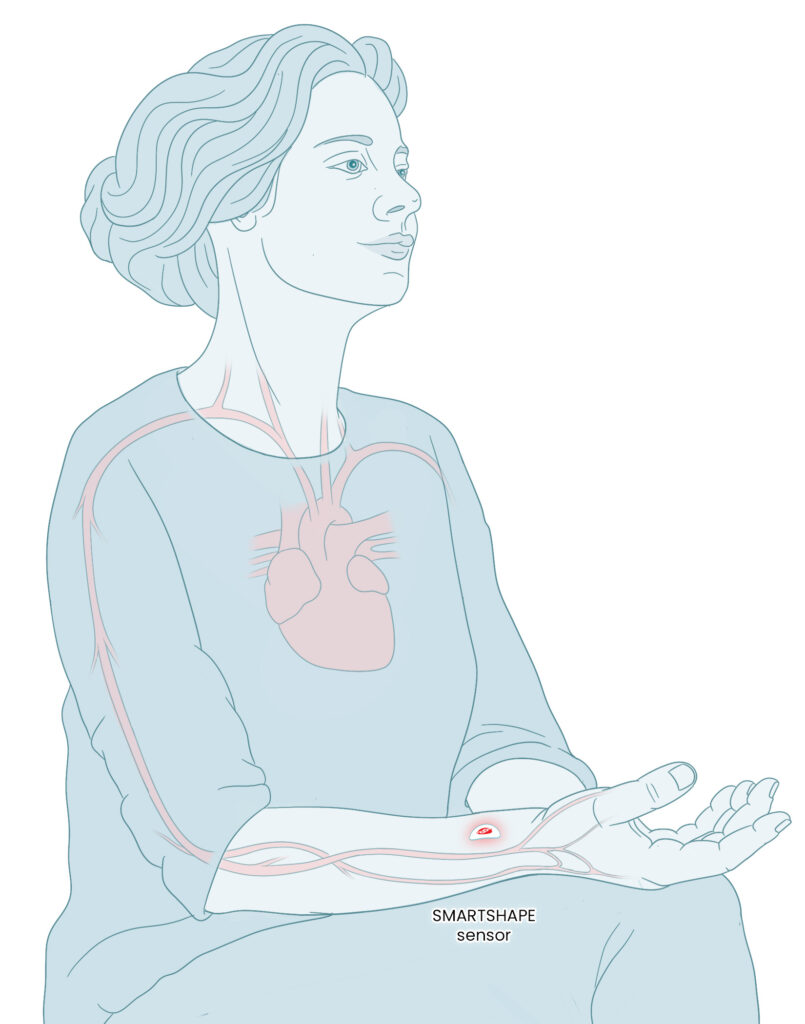
Enabling personalised care for patients at highest cardiovascular risk – that’s the aim of the SMARTSHAPE device. When a patient with difficult to treat hypertension comes in, you’re often relying on a limited snapshot of home readings the patient brings to their appointment. But there can be issues with these readings. SMARTSHAPE is developing a solution to this by offering novel continuous blood pressure monitoring.
Unmet need
The clinical need for continuous blood pressure monitoring
Hypertension affects 1.4 billion people aged 30-79 years worldwide (World Health Organization, 2024). When left poorly controlled, it significantly increases the risk of serious outcomes, such as heart attacks, heart failure, strokes, chronic kidney disease, and dementia.
Current methods
Current blood pressure monitoring methods, such as ambulatory or home monitoring, only capture snapshots throughout the day and are disruptive in the patient’s daily life. Meanwhile, current wearable devices lack clinical accuracy.
Accuracy and contextualized continuous data
That’s why there is a need for better continuous arterial pulse pressure monitoring. Accuracy, combined with contextualized, continuous data enable confident medication titration decisions. It can uncover masked hypertension during daily life, and inform clinical decisions based on better data.
Prof. Niamh Hynes
Cardiovascular surgeon at University of Galway and researcher at CÚRAM
Patient Profiles
Clinical Use Cases
The SMARTSHAPE device targets patients with the highest cardiovascular risk and can be used across a range of clinical use cases:
Patient Profile
This patient is typically:
- treated at a Comprehensive Stroke Center (CSC);
- in treatment for stroke due to uncontrolled hypertension;
- in rehabilitation.
Clinical objectives
The clinical objectives are to:
- prevent recurrence of another stroke;
- ensure blood glucose levels and cholesterol levels remain in their target range;
- achieve and maintain optimal blood pressure control.
Use of SMARTSHAPE
In the clinical setting
The SMARTSHAPE device would be inserted using a minimally invasive delivery device during clinical intervention at the hospital. Blood pressure levels will be monitored via a dashboard during rehabilitation. Alerts for spikes and readings outside of the target range can be set up.
At home
Similarly as the previous use case, the SMARTSHAPE device continues to monitor blood pressure 24/7 in real-life conditions. Readings can be automatically shared with the clinical team, with alerts for significant spikes or longer periods where the blood pressure is outside the target range. This data can be used to improve personalised treatment and monitor the effect of lifestyle changes.
Use case #1
Post-stroke patients
1.92 million patients in the EU and US have an incident stroke each year. 64% of people who have a stroke have hypertension (Wafa et al. 2020). These patients have a high risk of having a recurrent stroke, especially in the first 90 days post-stroke. Monitoring of blood pressure is key to adjust antihypertensive medication as needed, and to assess the impact of lifestyle changes on their blood pressure.
Patient Profile
This patient is typically:
- treated at a Comprehensive Stroke Center (CSC);
- in treatment for stroke due to uncontrolled hypertension;
- in rehabilitation.
Clinical objectives
The clinical objectives are to:
- prevent recurrence of another stroke;
- ensure blood glucose levels and cholesterol levels remain in their target range;
- achieve and maintain optimal blood pressure control.
Use of SMARTSHAPE
In the clinical setting
The SMARTSHAPE device would be inserted using a minimally invasive delivery device during clinical intervention at the hospital. Blood pressure levels will be monitored via a dashboard during rehabilitation. Alerts for spikes and readings outside of the target range can be set up.
At home
Similarly as the previous use case, the SMARTSHAPE device continues to monitor blood pressure 24/7 in real-life conditions. Readings can be automatically shared with the clinical team, with alerts for significant spikes or longer periods where the blood pressure is outside the target range. This data can be used to improve personalised treatment and monitor the effect of lifestyle changes.
Use case #1
Post-stroke patients
1.92 million patients in the EU and US have an incident stroke each year. 64% of people who have a stroke have hypertension (Wafa et al. 2020). These patients have a high risk of having a recurrent stroke, especially in the first 90 days post-stroke. Monitoring of blood pressure is key to adjust antihypertensive medication as needed, and to assess the impact of lifestyle changes on their blood pressure.
Use case #2
Uncontrolled hypertension patients
Over 1 billion people aged 30-79 years live with uncontrolled high blood pressure (World Health Organization, 2024). Assessing true blood pressure patterns outside of the clinic is key to identifying masked hypertension. By evaluating the effectiveness of the medication and monitoring the impact of lifestyle changes on blood pressure, more personalised treatment plans can be made.
Patient Profile
This patient is typically:
- on treatment for hypertension, but remains uncontrolled or resistant to the medication;
- at high risk for severe cardiovascular events, such as a stroke, heart attack or heart failure;
- managed by a hypertension specialist and primary care physician.
Clinical objectives
The clinical objectives are to:
- achieve blood pressure control through medication optimisation and compliance;
- reduce risk of cardiovascular events and organ damage;
- improve patient compliance with blood pressure monitoring.
Use of SMARTSHAPE
In the clinical setting
The SMARTSHAPE device is inserted using a minimally invasive delivery device at the clinic, and the patient receives training on how to use it and interpret the data effectively.
At home
Afterwards at home, the SMARTSHAPE device continues to monitor blood pressure 24/7 in real-life conditions. Readings can be automatically shared with the clinical team, with alerts for significant spikes or longer periods where the blood pressure is outside the target range. This data can be used to improve personalised treatment plans and monitor the effect of lifestyle changes.
Use case #2
Uncontrolled hypertension patients
Over 1 billion people aged 30-79 years live with uncontrolled high blood pressure (World Health Organization, 2024). Assessing true blood pressure patterns outside of the clinic is key to identifying masked hypertension. By evaluating the effectiveness of the medication and monitoring the impact of lifestyle changes on blood pressure, more personalised treatment plans can be made.
Patient Profile
This patient is typically:
- on treatment for hypertension, but remains uncontrolled or resistant to the medication;
- at high risk for severe cardiovascular events, such as a stroke, heart attack or heart failure;
- managed by a hypertension specialist and primary care physician.
Clinical objectives
The clinical objectives are to:
- achieve blood pressure control through medication optimisation and compliance;
- reduce risk of cardiovascular events and organ damage;
- improve patient compliance with blood pressure monitoring.
Use of SMARTSHAPE
In the clinical setting
The SMARTSHAPE device is inserted using a minimally invasive delivery device at the clinic, and the patient receives training on how to use it and interpret the data effectively.
At home
Afterwards at home, the SMARTSHAPE device continues to monitor blood pressure 24/7 in real-life conditions. Readings can be automatically shared with the clinical team, with alerts for significant spikes or longer periods where the blood pressure is outside the target range. This data can be used to improve personalised treatment plans and monitor the effect of lifestyle changes.
Use case #3 and more
And many other potential use cases...
The SMARTSHAPE device has promising applications beyond hypertension.
Our team is actively exploring new use cases in heart failure, stage 3–5 chronic kidney disease, diabetes, gestational hypertension, and other cardiovascular-related conditions. Do you work in one of these – or any other related – fields? We would love to hear from you and explore potential collaborations!
Use case #3 and more
And many other potential use cases...
The SMARTSHAPE device has promising applications beyond hypertension.
Our team is actively exploring new use cases in heart failure, stage 3–5 chronic kidney disease, diabetes, gestational hypertension, and other cardiovascular-related conditions. Do you work in one of these – or any other related – fields? We would love to hear from you and explore potential collaborations!
Integration
The SMARTSHAPE device
in your workflow
At what stage in the clinical workflow does the SMARTSHAPE device come in?
Use case #1
Post-stroke patients
For post-stroke patients, the SMARTSHAPE device may be used at an earlier stage of care, right after the clinical intervention at the hospital.
Hover over each step for more information.
Clinical team assesses the patient's condition and determine the need for continuous blood pressure monitoring. Factors like stroke severity, risk of recurrence, and the presence of other conditions would be considered.
An interventional cardiologist or neurologist would insert the device, likely during the patient's hospital stay.
SMARTSHAPE continuously monitors the patient's blood pressure, transmitting data to a secure platform, or hospital EHR systems, accessible to the clinical team.
Analysis would focus on identifying:
- Trends in blood pressure over time
- Spikes or dangerous fluctuations, especially in the initial 24-48 hours post stroke
- Responses to physical therapy and other interventions
- Potential side effects of medication
Protocols for data sharing with the patient's primary care physician or specialist for continued management and rehabilitation.
Depending on device lifespan and patient consent, SMARTSHAPE could provide ongoing monitoring and feedback to support long-term blood pressure control.
Patient
assessment
Device
insertion
Monitoring and
Data Integration
Treatment
adjustments
Post-Discharge monitoring
Device removal
or decommissioning
Clinical team assesses the patient's condition and determine the need for continuous blood pressure monitoring. Factors like stroke severity, risk of recurrence, and the presence of other conditions would be considered.
Patient
assessment
An interventional cardiologist or neurologist would insert the device, likely during the patient's hospital stay.
Device
insertion
SMARTSHAPE continuously monitors the patient's blood pressure, transmitting data to a secure platform, or hospital EHR systems, accessible to the clinical team.
Monitoring and
Data Integration
Analysis would focus on identifying:
- Trends in blood pressure over time
- Spikes or dangerous fluctuations, especially in the initial 24-48 hours post stroke
- Responses to physical therapy and other interventions
- Potential side effects of medication
Treatment
adjustments
Protocols for data sharing with the patient's primary care physician or specialist for continued management and rehabilitation.
Post-Discharge monitoring
Depending on device lifespan and patient consent, SMARTSHAPE could provide ongoing monitoring and feedback to support long-term blood pressure control.
Device removal
or decommissioning
Prof. Katarina Jood
Professor of Neurology and senior vascular neurologist at the Sahlgrenska Academy and Sahlgrenska University Hospital in Gothenburg, Sweden
“We have to learn how to use data from continuous blood pressure monitoring, but I believe it would lead to better outcomes for patients. Especially in patients with haemorrhagic stroke, because all studies point to the importance of blood pressure control for outcome.”
Use case #2
Uncontrolled hypertension patients
Hover over each step for more information.
Depending on the severity and other risk factors, patients with uncontrolled hypertension would be referred to a hypertension specialist, such as a cardiologist or nephrologist.
Specialist evaluates the patient's suitability for SMARTSHAPE, considering factors like medication adherence, lifestyle, and the need for continuous monitoring to optimise treatment.
If SMARTSHAPE is chosen, an interventional cardiologist or neurologist would insert the device in an outpatient setting. Eventually, trained primary care professionals can insert the device.
SMARTSHAPE continuously records blood pressure data and transmits it to a secure platform accessible to both the patient and the healthcare provider. The platform would ideally integrate the patient's existing health apps or wearables for a more holistic view of their health data.
Physician and patient would review SMARTSHAPE data together. Based on the insights, they would make informed decisions about:
- Medication adjustments for better control and reduced side effects.
- Targeted lifestyle modifications to address specific triggers for blood pressure elevation.
- Referrals to other specialists if necessary, such as a nutritionist or endocrinologist.
Depending on device lifespan and patient consent, SMARTSHAPE could provide ongoing monitoring and feedback to support long-term blood pressure control.
Diagnosis and
referral
consideration
Device
insertion
data sharing
decision-making
Long-term monitoring and support
Depending on the severity and other risk factors, patients with uncontrolled hypertension would be referred to a hypertension specialist, such as a cardiologist or nephrologist.
Diagnosis and
referral
Specialist evaluates the patient's suitability for SMARTSHAPE, considering factors like medication adherence, lifestyle, and the need for continuous monitoring to optimise treatment.
consideration
If SMARTSHAPE is chosen, an interventional cardiologist or neurologist would insert the device in an outpatient setting. Eventually, trained primary care professionals can insert the device.
Device
insertion
SMARTSHAPE continuously records blood pressure data and transmits it to a secure platform accessible to both the patient and the healthcare provider. The platform would ideally integrate the patient's existing health apps or wearables for a more holistic view of their health data.
data sharing
Physician and patient would review SMARTSHAPE data together. Based on the insights, they would make informed decisions about:
- Medication adjustments for better control and reduced side effects.
- Targeted lifestyle modifications to address specific triggers for blood pressure elevation.
- Referrals to other specialists if necessary, such as a nutritionist or endocrinologist.
decision-making
Depending on device lifespan and patient consent, SMARTSHAPE could provide ongoing monitoring and feedback to support long-term blood pressure control.
Long-term monitoring and support
Prof. Mitchell W. Krucoff
Professor of Medicine/Cardiology at Duke University, Director of the Cardiovascular Devices Unit at the DCRI, Special Government Employee for the U.S. Food and Drug Administration (FDA)
“You could create a list of 100 different scenarios that physicians could potentially and meaningfully individualize care for their patients by using continuous, high fidelity blood pressure data. For example, for a 60 year old who has struggled with managing blood pressure through half a dozen different medications who just had a renal denervation. So could I take less medicine? Is that four weeks later? Is that six weeks later? Will it last me for a year? For five years? There are so many of these scenarios where this is clinically useful information. And in addition such clinical scenarios, the value of such continuous high fidelity measures also has a wide spectrum of potential research applications.”
Get in touch
We'd like to hear from you
Do you face challenges in blood pressure monitoring of your patients? Whether you work in the areas described above or in another field where improved monitoring could make a difference, we’d love to hear your insights!
Share your experiences by completing our short survey (estimated time 10 minutes) or reach out directly through the contact form below.
Your input will help shape the future of continuous blood pressure monitoring.
Want to hear about our updates and progress first? Follow us on LinkedIn and subscribe to our newsletter.